AI could unlock $44.5b in economic value for the Philippines: YCP
About 97.5 million Filipinos spend an average of eight to nine hours online daily.
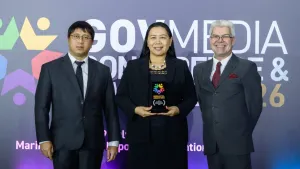
Artificial intelligence (AI) could generate $44.5b (PHP2.6t) in economic value for the Philippines if widely adopted across government and key sectors, said Eucel Maximo, Partner at YCP, during the GovMedia Summit 2026 at Shangri-La Makati, Manila.
He said AI adoption could improve efficiency in citizen services, disaster management, fraud detection, procurement, healthcare, and agriculture.
“Filipinos are digital citizens,” Maximo said, citing 97.5 million internet users who spend an average of eight to nine hours online daily.
He added that the government must match the speed and accessibility of private-sector services.
Maximo cited international examples from Australia, the United Kingdom, Portugal, and the United States to illustrate potential gains.
He said similar results are possible in the Philippines, given high digital adoption and growing government initiatives. AI adoption has reached 92% of Filipino organisations, although 65% remain at the proof-of-concept stage.
“The number one barrier is skills and also having the right team to help with the transformation,” he said, noting that government initiatives—such as eGovPH, with 14 million users as of 2025—provide a foundation for scaling AI in public services.
He highlighted several areas where AI could deliver measurable impact. In document processing, AI can review thousands of files simultaneously, flag inconsistencies, and cut review times by up to 90%.
Citizen services could operate 24/7, removing delays tied to office hours. Procurement and public funds can be monitored to detect fraud and corruption, whilst disaster resilience could improve through analysis of multiple data sources to predict typhoons and identify vulnerable areas.
In healthcare and agriculture, AI can detect illnesses from imaging scans and monitor environmental factors affecting crops.
Maximo noted challenges remain, including outdated procurement processes, risk aversion, and an AI skills gap. He proposed a “10-20-70” approach, with 70% focus on people and processes, 20% on technology, and 10% on algorithms.
“Scaling imperatives would be to embed AI inside core systems… build a talent pipeline, institutionalise AI governance, and measure the mission as well and how it changes everyone,” he said.
He said that the Philippines faces a choice between digitising existing bureaucracy, optimising current processes, or fully integrating AI to transform operations.
Whilst adoption has reached critical mass, most initiatives remain at pilot stage, underscoring the need to scale beyond pilot projects.
(US$1 = PHP58.4)