DepEd advances AI integration in classrooms under Project AGAP.AI
The initiative aims to reach 1 million students, 300,000 teachers, and 250,000 parents.
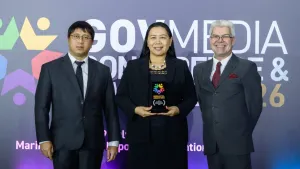
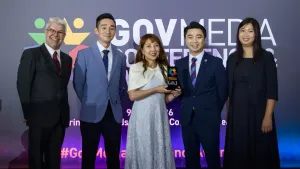
The Department of Education (DepEd) is advancing the use of artificial intelligence in basic education through Project AGAP.AI, including a national AI training programme launched in January, according to Dexter Galban, assistant secretary for strategic management at DepEd, at the GovMedia Summit 2026 on 17 March.
Project AGAP.AI aims to help students and teachers in the Philippines use AI through curriculum development, teacher training, and school tools.
The programme aims to reach 1.6 million people, including 1 million students, 300,000 teachers, and 250,000 parents, through a pilot national AI training program in cooperation with the ASEAN Foundation, Google.org, MIT RAISE, Day of AI, UNILAB Foundation, and UP NISMED.
It follows a three-part framework, namely AI in Education to support school operations, Education on AI to teach students and teachers about AI, and AI for Education systems to improve efficiency and decision-making.
The programme is part of DepEd’s aim to support over 25 million students and nearly 1 million school staff, reaching about two-thirds of the Philippine population when families are included.
"We would be able to provide guidance to our learners and give them the support that they need to manoeuvre this rapidly changing environment," he said.
Galban said they will continue to update AI guidelines over the next three years so students and teachers can use AI safely, develop skills for the digital economy, and stay up to date with developments in AI.
Along with this, DepEd released its first AI guidelines in February 2026, including the country’s first AI registry, a risk classification for AI tools, and a privacy impact assessment aligned with the National Privacy Commission.
The agency has also introduced AI tools in schools through the Education Center for AI Research (ECARE) at SEAMEO INNOTECH.
Tools like Sigla now measure students’ height, weight, and BMI with 98% to 99% accuracy, improving school feeding programmes, according to Galban.
"We are also providing AI-enhanced geohazard tracking assessment for our schools, to ensure that teachers would be able to map out how to prepare for disruptions in classes," he added.
Students and teachers also have access to platforms such as Khan Academy’s Khanmigo, Canva AI tools, and Microsoft Copilot to improve lesson planning, content creation, and classroom management.